Wildland Urban Interface (WUI) in Colorado
Learn how WUI designation affects your home, materials, and wildfire resilience.
The wildland urban interface in Colorado refers to areas where homes and natural vegetation meet, increasing wildfire exposure. If your property is in a WUI zone, embers, radiant heat, and wind-driven fire become real risks. This page explains what WUI means, how areas are designated, and what building considerations may apply. You’ll also learn practical ways to strengthen roofing, siding, windows, and vulnerable exterior details to reduce ignition risk and improve long-term resilience.
What Is the Wildland Urban Interface (WUI)?
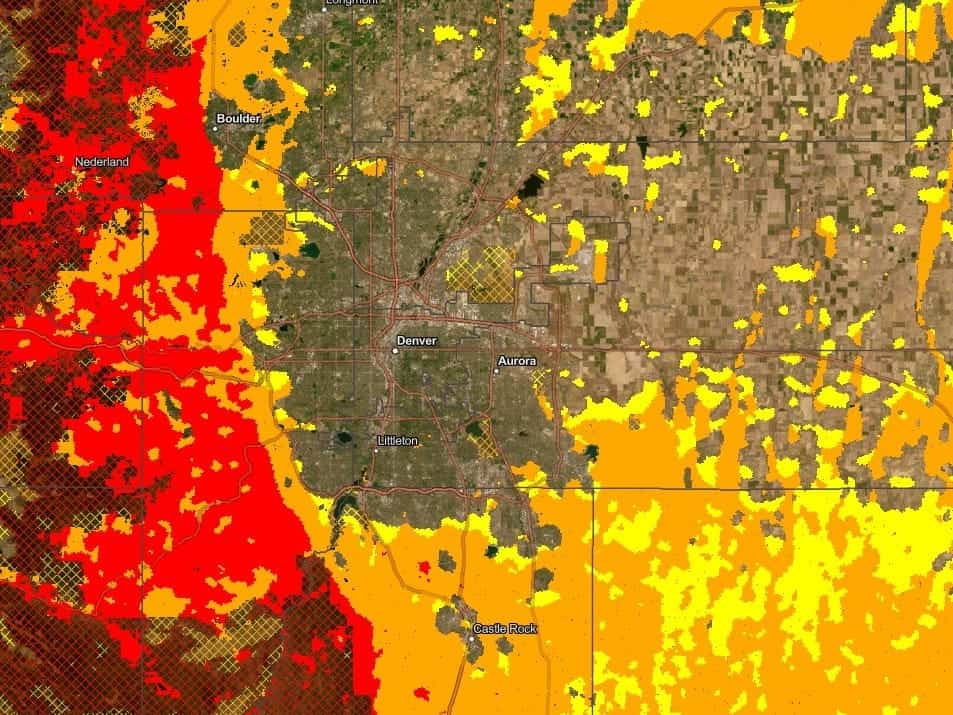
The wildland urban interface, often called the WUI, is the area where residential development meets or mixes with undeveloped land such as forests, grasslands, or open space. In Colorado, this often includes foothill and mountain-adjacent communities like Evergreen, Conifer, Golden, Castle Rock, and parts of Jefferson and Douglas County.
Homes located in the WUI face increased wildfire exposure because of their proximity to vegetation. Wind-driven embers can travel long distances ahead of a fire front, landing on roofs, in vents, or along eaves. Radiant heat from nearby burning vegetation can ignite siding, windows, and other exterior components. Direct flame contact is only one part of the risk. Ember intrusion is often the primary cause of home ignition.
WUI designation varies by jurisdiction and mapping authority. Counties and municipalities may use state guidance, local wildfire risk assessments, or adopted codes to determine where WUI standards apply. As a result, requirements in one community may differ from those in another.
Being located in a WUI zone may influence building standards, material choices, and construction methods, especially for roofing, siding, windows, and venting systems.
If your home is located in or near a designated WUI zone, hardening the exterior becomes one of the most effective ways to reduce ignition risk.
How to Harden a Home in the WUI
Protecting a home in the WUI is about layered defense. Each exterior component plays a role in reducing vulnerability to embers, heat, and flame exposure.
Roofing
The roof is one of the most critical components in wildfire protection. Class A roofing systems offer the highest level of fire resistance under building code standards. In addition to surface materials, proper underlayment adds another layer of protection. Edge details, valleys, and roof-to-wall intersections are common ember collection points and must be carefully constructed to reduce ignition risk.
Learn more about roofing options on our Wildfire-Resistant Roofing page.
Siding & Exterior Walls
Exterior walls are exposed to radiant heat and direct ember contact. Ignition-resistant materials such as fiber cement siding can significantly reduce vulnerability compared to untreated combustible materials. Proper installation is just as important as product selection. Gaps, exposed sheathing, and poorly sealed joints can create weak points in the wall assembly.
Explore material options on our Fire-Resistant Siding page.
Ember-Resistant Edges & Vents
Soffits, fascia, vents, and eaves are common ember entry points. Open or improperly protected vents allow embers to enter attic spaces. Eave construction and soffit materials can either slow or accelerate fire spread. Reinforcing these transition areas is a key part of home hardening in WUI zones.
See recommended approaches on our Ember-Resistant Soffit & Fascia page.
Windows & Glazing
Windows are vulnerable to both radiant heat and direct flame exposure. Multi-pane configurations and tempered glass can improve performance under heat stress. Frame materials and proper installation also influence how a window assembly responds during a wildfire event.
Learn more on our Wildfire-Resistant Windows page.
The Harden Your Home™ Program focuses on these critical ignition points to reduce wildfire vulnerability without overbuilding or overselling.
WUI Requirements, Codes, and Colorado Considerations
Some Colorado jurisdictions have adopted wildfire resiliency standards or portions of the Colorado wildfire building code. These may include requirements for roofing classification, siding performance, vent screening, or defensible space considerations.
WUI construction requirements in Colorado vary by municipality and county. A home in Jefferson County may face different expectations than a property in Douglas County or Boulder County. It is important to verify what applies to your specific address rather than assuming statewide uniformity.
Recent legislation such as HB25-1182 and evolving wildfire resiliency guidance continue to shape how communities approach construction in high-risk areas. Compliance can influence material selection, detailing, and permitting processes.
Road Home Exteriors manages permitting and aligns projects with applicable local standards when performing exterior upgrades under the Harden Your Home™ Program. The goal is to ensure that improvements are both code-conscious and performance-driven.
For more information, visit our Colorado Wildfire Resiliency Code page and our Colorado HB25-1182 page.
Requirements can change, but the goal remains the same: reduce ignition risk and improve resilience in high-risk wildfire zones.
FAQ
Evidence-based answers to common questions about the wildland urban interface in Colorado.
What is the wildland urban interface in Colorado?
The wildland urban interface in Colorado is the area where homes and structures are located near or within natural vegetation such as forests and grasslands. These zones face increased wildfire exposure because of ember travel, radiant heat, and proximity to combustible fuels.
What does WUI mean for homeowners?
WUI means your home may face higher wildfire risk and could be subject to specific building standards. It often influences roofing, siding, venting, and window requirements depending on local jurisdiction.
How do I know if my home is in the WUI?
You can determine if your home is in the WUI by checking local county or municipal wildfire risk maps. Many jurisdictions publish WUI zone maps Colorado homeowners can access online or through their building department.
Are there specific WUI building requirements in Colorado?
Yes, some areas have WUI building requirements in Colorado that affect roofing class, siding materials, vent protection, and construction detailing. Requirements vary by municipality and adopted code.
Do all Colorado homes have to follow WUI construction requirements?
No, not all homes in Colorado are subject to WUI construction requirements. Only properties located within designated wildfire risk zones and jurisdictions that have adopted specific standards must comply.
What upgrades matter most in a WUI zone?
Roofing, siding, vents, soffits, and windows are the most critical upgrades in a WUI zone. These areas are common ignition points during wildfire events.
What are WUI roofing requirements?
WUI roofing requirements typically include a Class A rated roofing system and attention to ember-resistant detailing. The exact standards depend on the adopted Colorado wildfire building code in your area.
What are WUI siding requirements?
WUI siding requirements generally emphasize ignition-resistant materials and proper installation methods. Fiber cement siding is commonly selected in wildfire resistant construction in Colorado.
Can I retrofit an existing home in the WUI?
Yes, existing homes can be retrofitted to improve wildfire resilience. Targeted upgrades to roofing, siding, soffits, vents, and windows can significantly reduce ignition risk.
How does the Harden Your Home™ Program help with WUI homes?
The Harden Your Home™ Program evaluates exterior vulnerabilities and recommends practical improvements aligned with Colorado WUI requirements. The focus is on strengthening key ignition points while ensuring compliance with applicable local standards.
Ready to Harden Your Home?
Upgrading your home’s exterior now is the best way to protect your home, prepare for new wildfire codes, and gain peace of mind. Our team is ready to help you get started.
Where We Offer Wildfire-Ready Exterior Services
Our Service Areas
Road Home Exteriors proudly serves the following Colorado communities:
Arvada
Aurora
Bennett
Boulder
Brighton
Broomfield
Byers
Castle Pines
Castle Rock
Centennial
Commerce City
Conifer
Dacono
Denver
Edgewater
Elizabeth
Englewood
Erie
Evergreen
Federal Heights
Firestone
Fort Lupton
Franktown
Frederick
Golden
Greenwood Village
Gunbarrel
Highlands Ranch
Hudson
Indian Hills
Jefferson County
Ken Caryl
Kiowa
Lakewood
Larkspur
Littleton
Lochbuie
Lone Tree
Longmont
Louisville
Louviers
Morrison
Niwot
Northglenn
Parker
Roxborough Park
Sedalia
Sterling Ranch
Strasburg
Superior
The Pinery
Thornton
Watkins
Wattenberg
Westminster
Wheat Ridge
What Makes Us Different?
Lifetime Workmanship Warranty
At Road Home Exteriors, we back every qualifying project with our Lifetime Workmanship Warranty because we’re confident in the quality of our roofing, siding, and window installations. This warranty covers installation-related issues as long as you have your home, giving you lasting protection without hidden loopholes.
No-Pressure Sales
Our No-Pressure Sales approach means you’ll never feel rushed or pushed into a decision. We’re here to educate, not upsell—giving you the facts so you can choose what’s best for your home. No gimmicks, no “sign-now” discounts—just honest guidance and answers every step of the way.
No Change Order Guarantee
Our No Change Order Guarantee protects you from extra charges caused by our own estimating, measurement, or quantity errors within the agreed scope. Customer-requested changes, hidden conditions, and other exclusions are explained in our written guarantee.
Road Home Exteriors is proud to be a 2026 BBB Torch Awards for Ethics finalist in the Central Colorado Small Business category. Learn more about this recognition and what it means for our customers.
Do What Is Expected, Then Do More™
This isn’t just a tagline – it’s how we operate every single day. At Road Home Exteriors, we believe the baseline is doing the job right: accurate inspections, honest pricing, quality craftsmanship, and clear communication. But we don’t stop there.
We go further by educating our customers, standing behind our work, and treating every home like it’s our own. From the first consultation to the final walkthrough, our goal is to exceed expectations – not just meet them.