
October 2026
Boulder County is expanding its efforts to help homeowners protect their houses from wildfire. On October 19, 2026, the county announced its new Wildfire Partners Home Hardening Pilot Program, which offers financial assistance for qualifying improvements to existing homes.
Through the program, eligible homeowners may receive assistance covering 50% of approved home-hardening costs, up to $2,000.
The program focuses on reducing wildfire vulnerabilities in the house itself, including exterior building components and the area immediately surrounding the structure.
For homeowners throughout Boulder County, the announcement is another reminder that wildfire preparedness involves more than clearing trees and vegetation. The materials and construction details of a house also play an important role.
Here’s what homeowners should know about the new program, how to qualify, and what options are available for larger exterior improvements.
What Is Boulder County’s Home Hardening Pilot Program?
The Home Hardening Pilot Program is a new initiative operated by Boulder County’s Wildfire Partners.
Its purpose is to help homeowners complete certain wildfire-resistant improvements while developing a network of trained contractors who can perform this specialized work.
Boulder County has selected five contractors to participate in the pilot. These contractors have completed program training and will perform approved improvements on participating homes.
The county plans to evaluate the results through 2027. If the pilot is successful, Wildfire Partners may eventually establish a broader home-hardening contractor list and an ongoing financial-assistance program.
The current pilot is limited, and acceptance is not guaranteed.
Homeowners interested in participating must meet eligibility requirements and submit an application through Wildfire Partners.
Read Boulder County’s official October 19, 2026 announcement.
How Much Financial Assistance Is Available?
Boulder County will cover 50% of qualifying home-hardening improvements, up to a maximum county contribution of $2,000.
Here are examples of how that assistance works:
| Qualifying Project Cost | County Contribution | Homeowner Contribution |
|---|---|---|
| $1,000 | $500 | $500 |
| $2,000 | $1,000 | $1,000 |
| $4,000 | $2,000 | $2,000 |
| $6,000 | $2,000 | $4,000 |
| $10,000 | $2,000 | $8,000 |
The program generally expects participants to complete at least $4,000 in qualifying work, unless all of their identified eligible home-hardening items can be completed for less.
The county pays its portion directly to the participating contractor. The homeowner is responsible for the remaining balance.
Not every wildfire-resistant improvement qualifies for assistance. Eligibility depends on the homeowner’s Wildfire Partners assessment and the program’s requirements.
Who Qualifies for the Home Hardening Pilot Program?
According to Boulder County, homeowners must have already received a Wildfire Partners home assessment to apply.
The program is intended for homeowners with specific outstanding mitigation measures identified in their assessment reports.
These include:
- West Boulder County: Home-hardening measures marked as required, identified by red checkboxes.
- East Boulder County: Home-hardening measures marked as priority items, also identified by red checkboxes.
Measures marked as recommended with yellow checkboxes do not qualify for financial assistance through this pilot.
Homeowners who have already received a Wildfire Partners certificate are not eligible for the pilot.
Applications are competitive, participation is limited, and homeowners may have to wait several weeks for an application decision. Boulder County plans to evaluate applications until the pilot concludes in 2027.
Homeowners should review the official requirements before applying.
Read the complete Wildfire Partners Home Hardening Pilot Program description.
What Types of Wildfire-Resistant Improvements Can Homeowners Make?
Home hardening involves improving the physical parts of a house that may be vulnerable to wind-driven embers, radiant heat, and direct flame contact.
Unlike vegetation management, which focuses on combustible materials around a property, structural home hardening addresses the building itself.
Depending on a home’s existing construction, wildfire-resistant improvements may involve several exterior components.
Fire-Resistant Siding
Exterior siding can influence how a home responds to radiant heat and direct flame exposure.
Noncombustible materials such as James Hardie fiber cement siding can be an option for homeowners replacing aging or combustible exterior cladding.
The performance of the entire wall also depends on underlying materials, installation details, and nearby ignition hazards.
Learn more about fire-resistant siding for Colorado homes.
Wildfire-Resistant Roofing
Roofs are particularly vulnerable to wind-driven embers and combustible debris during wildfires.
Class A fire-rated roofing assemblies provide the highest classification under standard roof-covering fire tests. However, that rating applies to the tested assembly, not simply an individual shingle or roofing product.
Homeowners replacing a roof can evaluate appropriately rated roofing systems and vulnerable roof details as part of their project.
Explore wildfire-resistant roofing options.
Ember-Resistant Vents
Attic, gable, foundation, and other exterior vents can provide pathways for wind-driven embers to enter a building.
Ember-resistant vents are designed to reduce that risk while maintaining needed ventilation.
Road Home Exteriors is a Vulcan Vents Product Certified Installer and has completed ember-resistant vent installations throughout Colorado.
Learn how ember-resistant vents help protect homes.
Windows, Soffits, and Fascia
Windows and roof overhangs can also become vulnerable during wildfire exposure.
Depending on the home, improvements may include appropriate multi-pane tempered glazing, noncombustible soffit materials, and more ignition-resistant exterior assemblies.
Learn about wildfire-resistant windows.
Explore ember-resistant soffit and fascia improvements.
Important: These are examples of home-hardening improvements, not a list of upgrades automatically covered by Boulder County’s pilot. Only specifically approved measures identified through the county’s assessment and program process qualify for financial assistance.
Can Homeowners Choose Their Own Contractor?
For work funded through the new Home Hardening Pilot Program, homeowners must follow Boulder County’s contractor requirements.
The county has already selected five participating contractors through a competitive process.
Homeowners accepted into the pilot work with their assigned contractor, review an approved bid, and participate in the required inspection process.
Homeowners who want to hire a contractor outside the pilot may still pursue privately funded wildfire-hardening improvements. However, work performed by a nonparticipating contractor should not be assumed to qualify for this pilot’s financial assistance.
This distinction is especially important for homeowners planning larger roofing, siding, or window replacement projects.
What If Your Home Needs More Work Than the Pilot Covers?
The county’s financial assistance is limited to $2,000 per qualifying project.
That can help reduce the cost of certain smaller improvements, but homeowners may have additional needs beyond their approved pilot scope.
For example, someone might be planning a complete siding replacement because the existing siding is aging or deteriorating. Another homeowner might need a new roof and want to incorporate wildfire-resistant materials into the replacement.
These larger projects can provide opportunities to improve wildfire resistance while addressing necessary exterior maintenance.
Homeowners can also plan improvements in stages, prioritizing vulnerable openings or exterior details before undertaking larger replacements.
The best approach depends on the home’s construction, wildfire exposure, budget, and applicable building requirements.
How Road Home Exteriors Helps Boulder County Homeowners
Road Home Exteriors is a locally owned roofing, siding, and window contractor serving Boulder County, Greater Denver, and Colorado’s foothills.
Through our Harden Your Home™ Program, we help homeowners evaluate exterior wildfire vulnerabilities and plan improvements suited to their homes.
Our process begins with a 28-Point Wildfire Risk Assessment, which evaluates siding, roofing, vents, windows, soffits, fascia, and other potential areas of concern.
We can then help homeowners prioritize exterior improvements based on their existing construction and project goals.
Our experience includes completed wildfire-hardening projects in Colorado communities such as Nederland, Golden, Indian Hills, and Rollinsville.
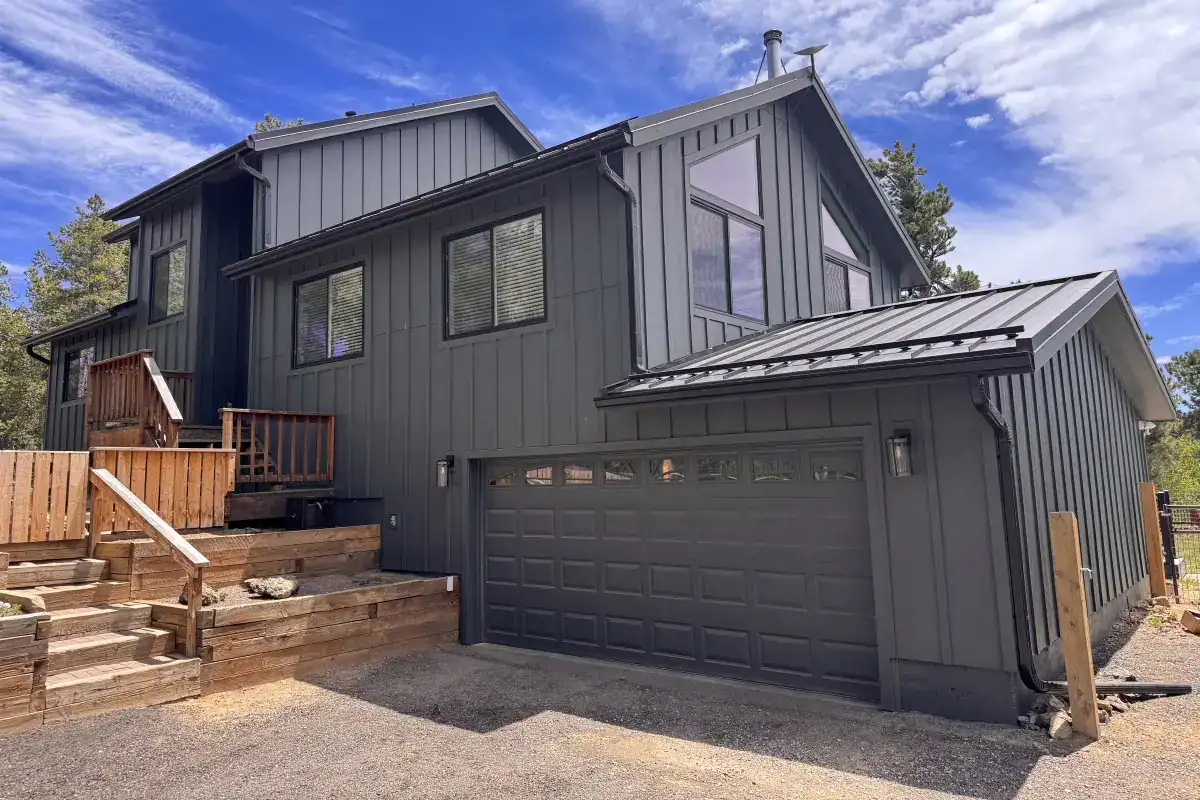
For example, a home near Nederland received a coordinated exterior upgrade involving James Hardie siding, LP FlameBlock sheathing, Pella Impervia windows, Vulcan Vents, and standing seam metal roofing.
That type of project demonstrates how multiple exterior improvements can be incorporated into a larger renovation.
Road Home Exteriors is not a participating contractor in Boulder County’s Home Hardening Pilot Program. Our Harden Your Home™ Program is an independent service, and projects completed through RHE are not eligible for reimbursement under this pilot merely because they include wildfire-resistant improvements.
Homeowners seeking county-funded work should apply directly through Wildfire Partners and follow its requirements.
Homeowners planning independently funded exterior improvements can contact RHE for a consultation.
Frequently Asked Questions
Is Boulder County paying homeowners to make their houses more wildfire-resistant?
The Home Hardening Pilot Program provides financial assistance for qualifying improvements. Boulder County covers 50% of approved costs, up to $2,000, and pays its portion directly to the participating contractor. Homeowners pay the remaining amount.
Can any Boulder County homeowner apply?
No. Applicants must have received a Wildfire Partners home assessment and meet the pilot’s eligibility requirements. Participation is limited, and homeowners who have already received a Wildfire Partners certificate are not eligible for this particular program.
Does the program cover replacing an entire roof or all of a home’s siding?
Not automatically. Only qualifying measures identified in a homeowner’s assessment and approved through the program are eligible. Homeowners should confirm specific work with Wildfire Partners before making financial commitments.
Can I use Road Home Exteriors and still receive the county’s $2,000 assistance?
Road Home Exteriors is not one of the five contractors participating in the pilot. Work performed independently by RHE is not eligible for the pilot’s cost-sharing benefit. Homeowners seeking that assistance must follow Wildfire Partners’ approved contractor process.
Do I need to participate in Wildfire Partners to make my home more resistant to wildfire?
No. Homeowners can voluntarily pursue wildfire-resistant improvements independently of the pilot, subject to applicable permits, building codes, and other local requirements.
What is the difference between a Wildfire Partners assessment and RHE’s assessment?
Wildfire Partners operates Boulder County’s official wildfire mitigation assessment program. Its findings determine eligibility for certain county programs and may support certification.
RHE’s 28-Point Wildfire Risk Assessment is an independent, construction-focused evaluation intended to help homeowners understand exterior vulnerabilities and possible improvements. It does not replace a county assessment or provide Wildfire Partners certification.
Will wildfire-hardening improvements lower my homeowners insurance premium?
Some insurers recognize qualifying mitigation measures, but discounts and underwriting decisions depend on the insurer, policy, location, and applicable standards. No individual improvement guarantees a discount. Homeowners should ask their insurer what documentation or certification it recognizes.
How long will the Boulder County pilot program run?
Boulder County says applications will be accepted and evaluated until the pilot concludes in 2027, subject to program capacity and eligibility requirements.
Preparing Your Colorado Home for Wildfire
Boulder County’s new Home Hardening Pilot Program is an encouraging step toward helping homeowners address vulnerabilities in existing houses.
It also highlights an important point: reducing wildfire risk often requires looking beyond vegetation and considering the materials, openings, and construction details of the home itself.
Whether a homeowner qualifies for the county’s pilot or chooses to make improvements independently, understanding those vulnerabilities is a useful place to start.
Road Home Exteriors helps homeowners throughout Boulder County and the foothills plan exterior improvements involving roofing, siding, windows, vents, and related components.
To learn more about our independent wildfire-hardening services, explore the Harden Your Home™ Program or contact Road Home Exteriors to schedule a free consultation.
Do What Is Expected, Then Do More™.
Source: Boulder County Wildfire Partners, October 19, 2026. Program eligibility, funding, contractor participation, and application requirements are controlled by Boulder County and may change. Road Home Exteriors is an independent contractor and is not affiliated with or endorsed by the Wildfire Partners Home Hardening Pilot Program.